Posts Categorized: How to

Working with IDBWrapper, Part 1

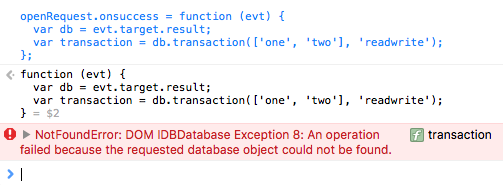
A while ago I released IDBWrapper. If you don’t know it, it’s a wrapper for IndexedDB, a current specification (in draft status) for an in-browser object store. It’s implemented in Firefox and Chrome, and somehow (as a plugin of sorts) also in IE, but, honestly, I don’t care about that too much.

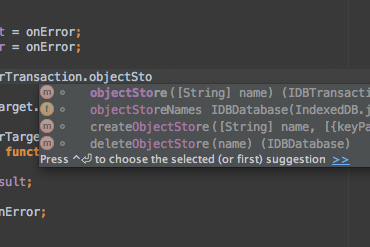
It is mainly meant to serve as an example implementation, so that you could have a look at the code and see how to work with IndexedDB. But I figured that people are also interested in actually using it, as it abstracts away many of the tedious internals of IndexedDB (like transactions) – and it is perfectly fine to use IDBWrapper for all non-overly-complex scenarios.

So here’s a tutorial about how to work with IDBWrapper and add a little background info about IndexedDB internals every now and then, instead of writing Yet-Another-Super-Technical-IDB-Blargh. Part one will cover some info about what IndexedDB is, getting IDBWrapper to run and how to read and write data to a store. Part two will be about querying the store.

read more »

Creating a persistent Dojo Object Store

[Note: This is a cross-post. I also published this on the uxebu blog.]

As of version 1.6, dojo comes with the new Dojo Object Store API. This is an awesome thing, as it greatly simplifies the work with data stores in Dojo. Everybody who had to do with the traditional dojo.data API felt it was overly complex and hard to use – this has finally changed now. There are also wrappers from and to the old and new APIs, so that you can do stuff like using your traditional data-aware widgets with a new Object Store. And the goodness doesn’t end here; but more on this later. If you haven’t done so yet, you might want to read the excellent post on the new Dojo Object Stores by Kris Zyp where he explains all the awesomeness he created.

read more »

Don’t use Cookies

– or: How to persist data in the 21st century.

The common way to persist data on the client side – application state, offline data, whatever –  still is to use cookies. But times have changed, and so have browsers, and there are better ways to do it today.

But why are cookies that bad? Well, here are the top three reasons:

  1. Of all client side storage mechanisms, cookies have the worst limitation in size (4k if you want to stay IE-safe)
  2. Cookies are sent to the server on every requests that matches the cookie domain – inlcuding XHR calls (aka. How to slow down your AJAX app)
  3. Cookies perform bad, can be easily disabled, and, oh well, they are sooo 1995…

What else to use? There are several options, let’s start with the best:
read more »